INTRODUCING VUEPOD
Bin Picking, Productized.
The first self-contained unstructured bin picking cell for machine tending and fixture loading that ships ready to run — vision trained, robot pre-programmed, no integration project required.
Built for automotive suppliers and OEMs running ferrous parts. Connect, calibrate, and you’re picking parts in days — not months.
3 Days
on-site setup from delivery to first pick
< 1 Yr
ROI on a triple-shift line
3 Steps
connect · calibrate · teach placement
All the capability of custom vision. None of the custom-project risk.
Bin picking deployment traditionally required a dedicated team, bespoke design, and custom software configuration. It can also be difficult to bring in the right expertise — for many integrators, machine vision is outside core competency. It could be months before the first part runs — and the next project takes just as long.
The old model
- 3–6 months of custom integration
- Vision expertise required for strong design
- Risk of unexpected integration challenges
- Each deployment its own timeline
- Tuning iterations a near-certainty
One cell. Bin pick, regrip, fixture load — end to end.
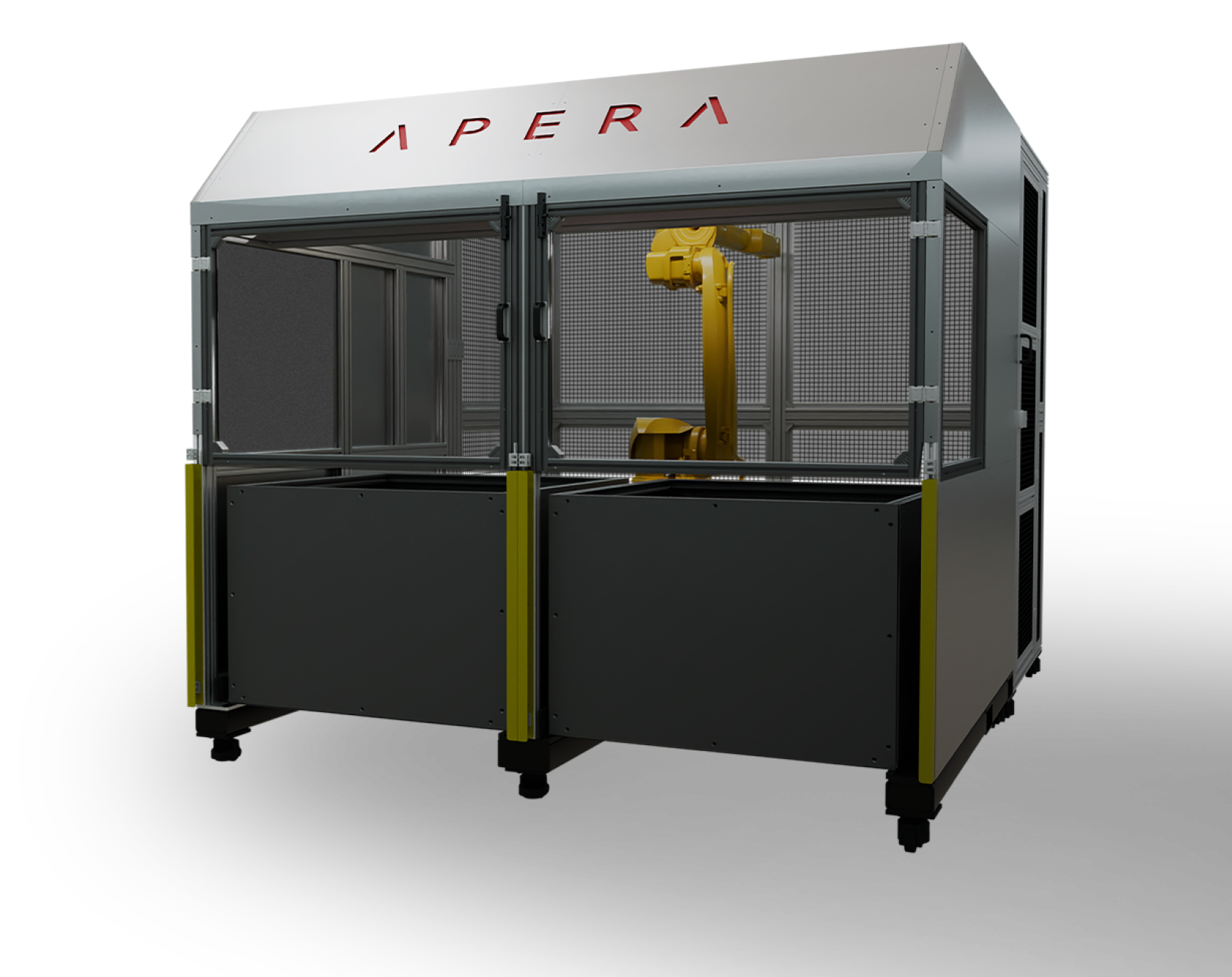
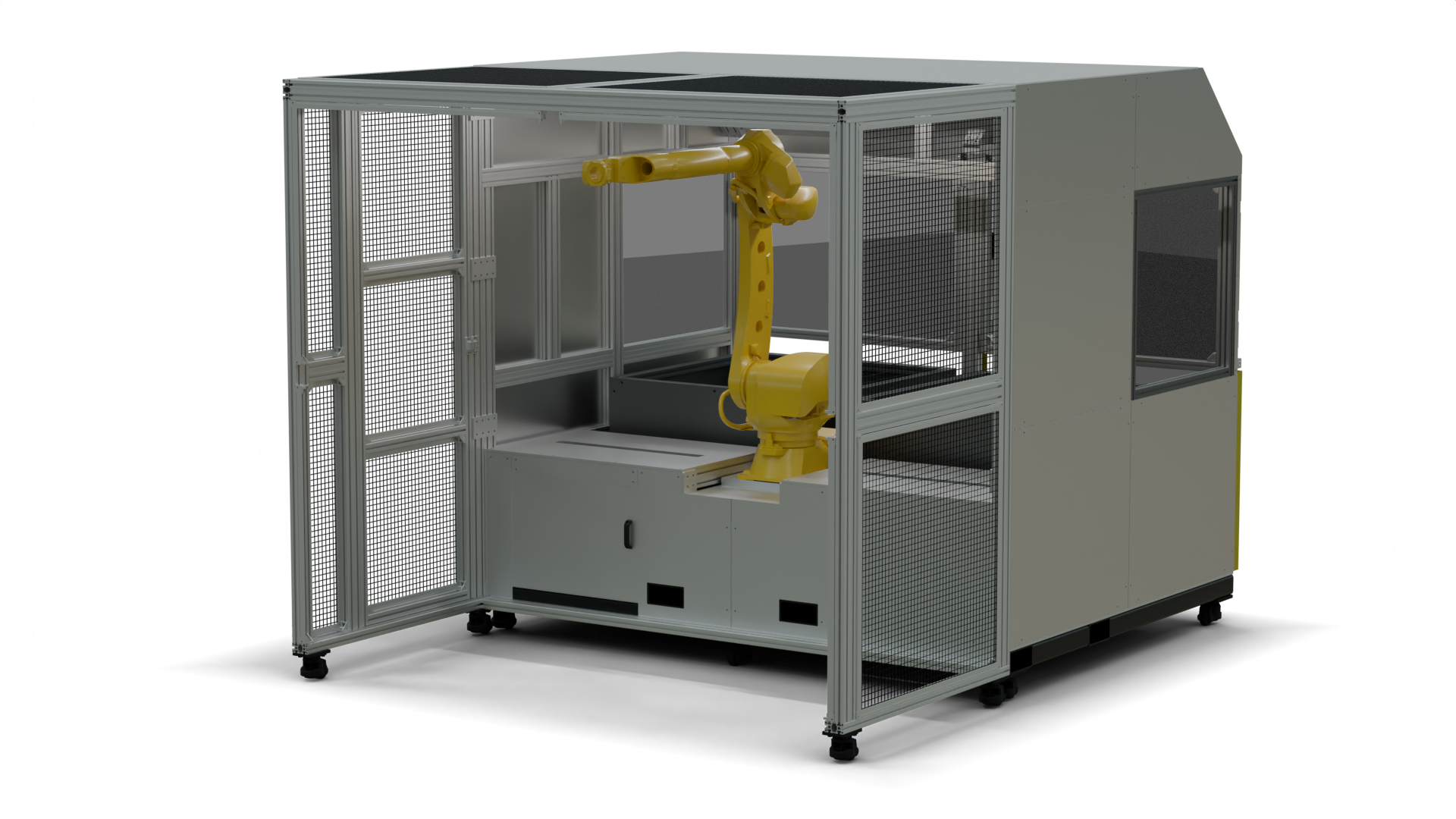
VuePod is a complete, self-contained machine-tending cell from Apera AI. Hardware, vision software, and a pre-programmed robot — combined into a single product that can be installed, calibrated, and running without robot programming or vision expertise on-site.
Self-configures
VuePod self-configures for any part, leading to optimal pick and place cycles.
No programming required
Integrators drop it into a line design without a vision engineer on the team.
Proven platform
Built on Apera’s proven 4D vision guided robotics platform — deployed across leading automotive OEMs and Tier 1 suppliers in North America.
Up and running in three steps.
Connect
Connect power and ethernet to the cell. Connect upstream and downstream PLC signals to the safety system.
Calibrate
Run the auto-calibration routine on first boot. The cell picks a calibration board off the inside wall and self-configures all cameras.
Teach Placement
Place a single part in the fixture from the HMI to confirm the drop location. That’s the only input the end user needs to provide before production.
Press Run. VuePod handles the rest.
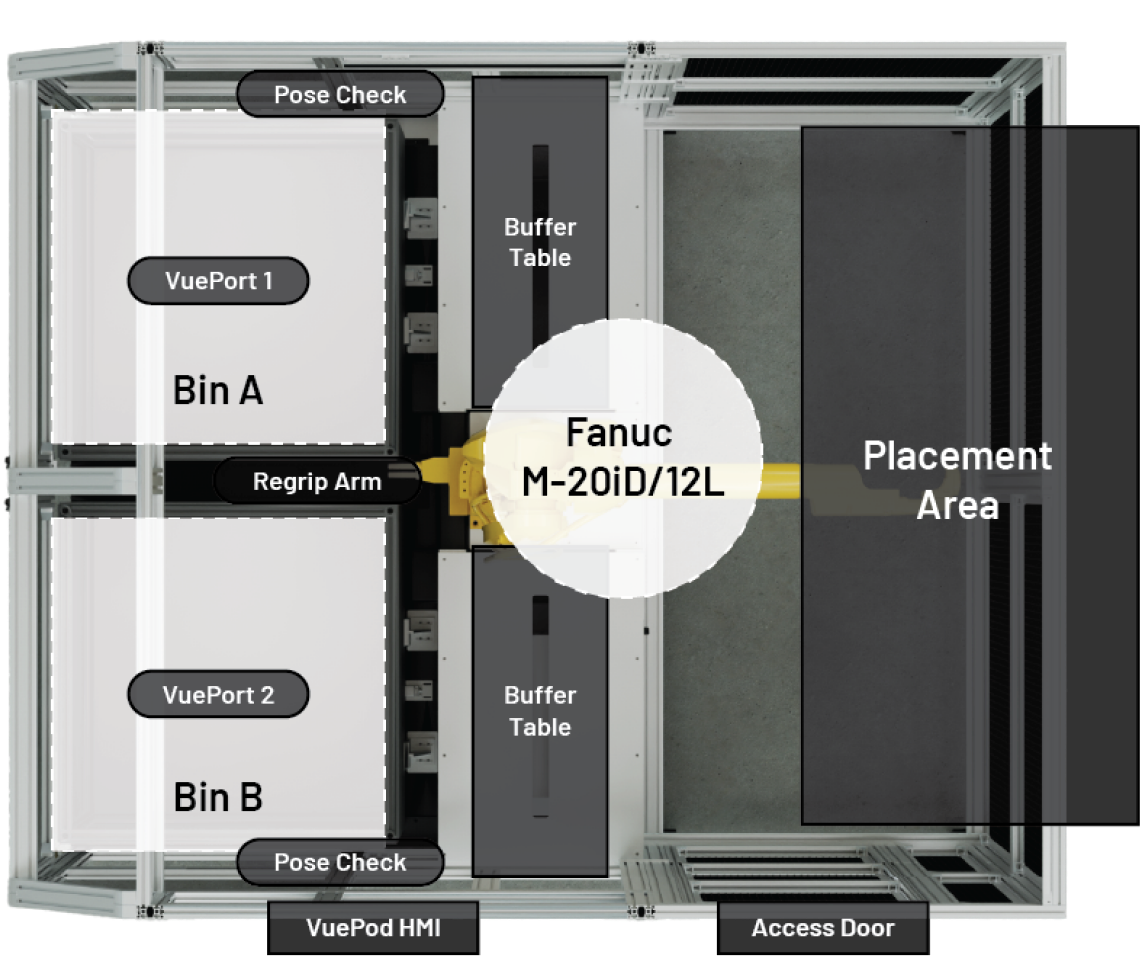
What's Inside the Cell
WHY VUEPOD
Every design decision exists to solve a known failure mode.
Days, not months.
Custom vision integration consumes 3–6 months of design, testing, and approvals — even when the budget is already signed. On-site setup completes in under 3 days.
Every pick validated.
Pose-check cameras confirm every pick before it reaches the machine. The rotary regrip station eliminates the #1 failure mode in bin-to-fixture loading: invalid part orientation. Part geometry is validated in simulation before the cell ships.
No surprises.
No design costs, no failed iterations, no vision expertise to hire. VuePod eliminates the guesswork from the bin picking process, providing you with a validated design to pick any ferrous part.
Built to scale.
Same cell, same setup procedure, same support model at every station. Vision assets and robot programs carry over across duplicate deployments. The pilot is the program — station two is just a purchase order.
Technical Specs
| Part profile | Ferrous metal · small to medium · ≤ 15" longest dimension · ≤ 4kg |
| Application | Single-SKU machine loading into a fixture or jig, or onto a conveyer |
| Bin configuration | Two-bin design · single-SKU now-and-next bins |
| Bin access | Forklift and AMR accessible · bins up to 48" × 48" × 34" |
| Robot | Fanuc M-20iD/12L · pre-programmed · no on-site robot programming required |
| Gripper | Magnetic · single gripper covers full supported part range |
| Vision platform | Apera's proven vision guided robotics platform · stereo perception · auto-generated pick points |
| Regrip | Integrated rotary regrip station · corrects part orientation before placement |
| Pick validation | Dual VuePort pose-check cameras · validates every pick before machine handoff |
| Operator interface | Wall-mounted HMI · start/stop, bin swap, placement re-teach · no software access required |
| On-site integration | < 3 days · connect PLC signals · support for Allen-Bradley or Siemens |
| Time to first pick | As fast as 4 weeks after purchase order |
| ROI model | < 1 yr payback for triple-shift operation · < 2 yr payback on double-shift operation |
| Software support | 3 year Apera service agreement included |
“
Automotive suppliers have been waiting for a machine-tending cell that can actually do bin picking — and that they can actually install. Not a research project — a product with a known price, a known footprint, and a known path to running parts. VuePod is that product.
Sina Afrooze, CEO, Apera AI
“
Instead of scoping a custom integration, we’re deploying a proven platform — one that’s been tested, calibrated, and validated before it ever arrives on the plant floor. That’s a fundamentally different model, and a much lower-risk path to automation.
Calvin Kimura, Ethos Automation
See it work on your parts before you commit.
We’re running a limited “Production Readiness” program to test VuePod on best-fit parts at our Detroit facility. Send us a bin of your ferrous stamped parts — we’ll run them on the cell and send you back cycle time and placement accuracy data. No commitment required.
What We Ask
One or two bins of ferrous parts (≤ 15″ longest dimension, ≤ 4kg), shipped to our Detroit facility. That’s it.
What You Get
- Live run on the VuePod cell at Apera's Detroit facility
- Cycle time and placement accuracy data — yours to keep
- Honest go / no-go assessment for VuePod on your application
Early access is open now.
Early access customers work directly with Apera to deploy the first VuePod cells into production. You get direct input into the product roadmap, priority scheduling for deployment, and close support from the teams that built the cell.
Who Qualifies
- Tier 1 or Tier 2 automotive suppliers and OEMs
- Identified machine-loading use case with ferrous metal parts
- Ready to move from approval to deployment within the program window
Applications reviewed within 5 business days. Priority given to best-fit applications.
Frequently Asked Questions
What is VuePod?
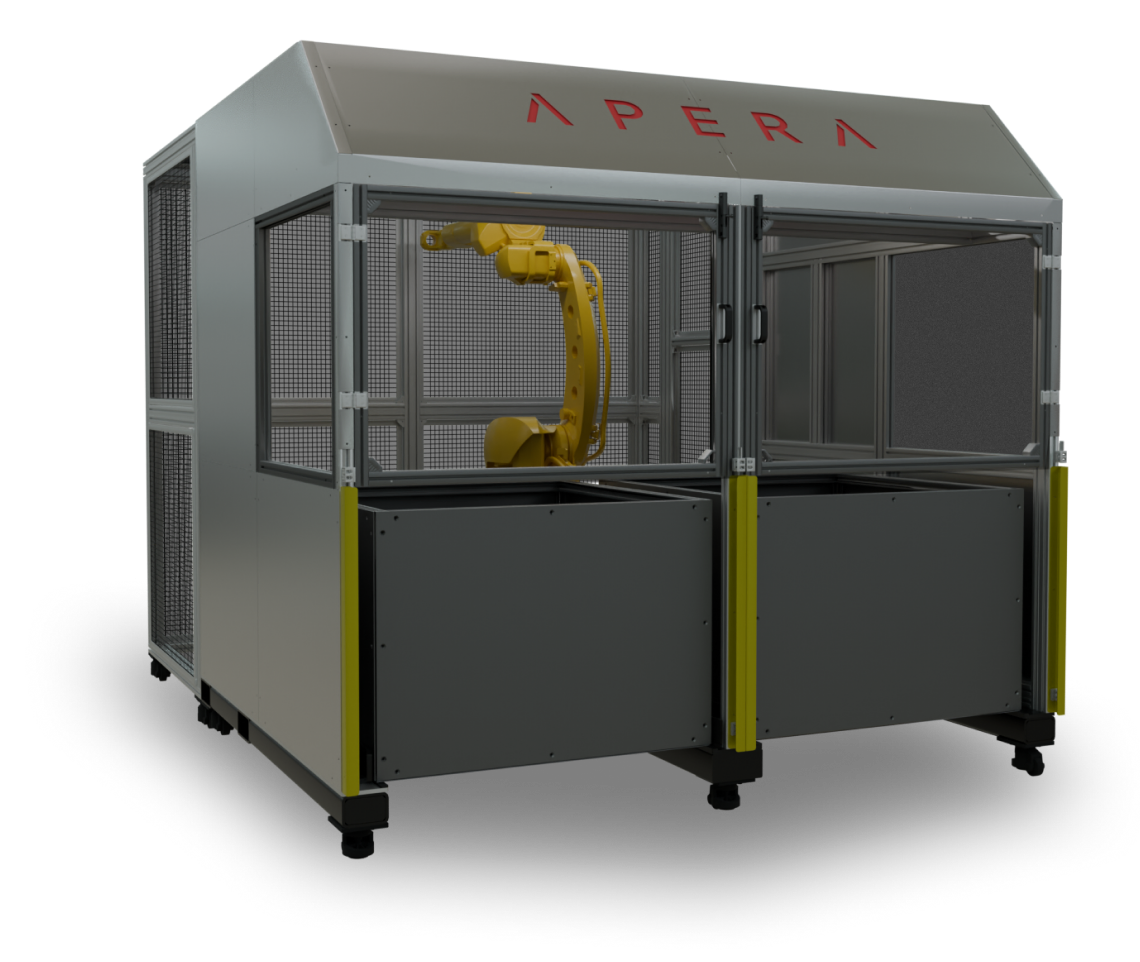
VuePod is a complete, self-contained machine-tending cell from Apera AI. It combines industrial hardware — bins, cameras, magnetic gripper, regrip station, safety systems, and HMI — with Apera's proven vision guided robotics platform into a single product. It can be installed, calibrated, and running without robot programming or vision software expertise on-site.
What parts does VuePod support at launch?
VuePod V1 supports single-SKU ferrous stamped sheet metal parts, small to medium size (≤ 15" in the longest dimension), picked from a bin and placed into a fixture or jig. Pick points are generated automatically — no manual grasp-point teaching required.
How long does on-site setup take?
The full process is designed to complete within a 3-day integration window. A certified technician handles positioning, power/ethernet connection, PLC integration, first-boot auto-calibration, and part-in-jig finding.
Do I need vision or robotics expertise to operate it?
No. Day-to-day operation runs entirely through the wall-mounted HMI. Operators can start and stop the cell, monitor diagnostics, and initiate bin swaps without touching any robotics or vision software. If a jig is moved or replaced, placement can be re-taught from the HMI — no support call required.
What is the expected ROI?
VuePod is modelled around a payback period of under two years for double-shift applications, and as low as one year on triple-shift lines. The strongest ROI comes from dedicated machine-tending stations where one operator works one cell continuously — a common pattern in Tier 1 and Tier 2 welding and body shop operations.
What does 'early access' mean?
Early access customers work closely with Apera to deploy the first VuePod cells in production environments. Participants have direct input into the product roadmap, receive priority scheduling for deployment, and get close support throughout commissioning and early production.
What's on the roadmap after V1?
Future configurations being explored include dual-SKU loading from two bins, finished goods handling for a full machine-tending loop, and repack applications. Application fit and sequencing will be driven by early customer feedback.